MCP Server Architecture for Analytics Data Exposure
Governed metrics and read-only datasets protect agents from metric hallucination.
For API-first and agent-first teams, a headless analytics backend should expose governed metrics through APIs and MCP without requiring a prebuilt dashboard UI. MCP server architecture for analytics data exposure should therefore place a read-only, permission-scoped dataset layer between agents and production. Pre-modeled metrics, independent data-layer controls, and strict tenant isolation distinguish a trustworthy analytics backend from a database connector.
What MCP servers actually do and why analytics deployments are different from general tool connectors
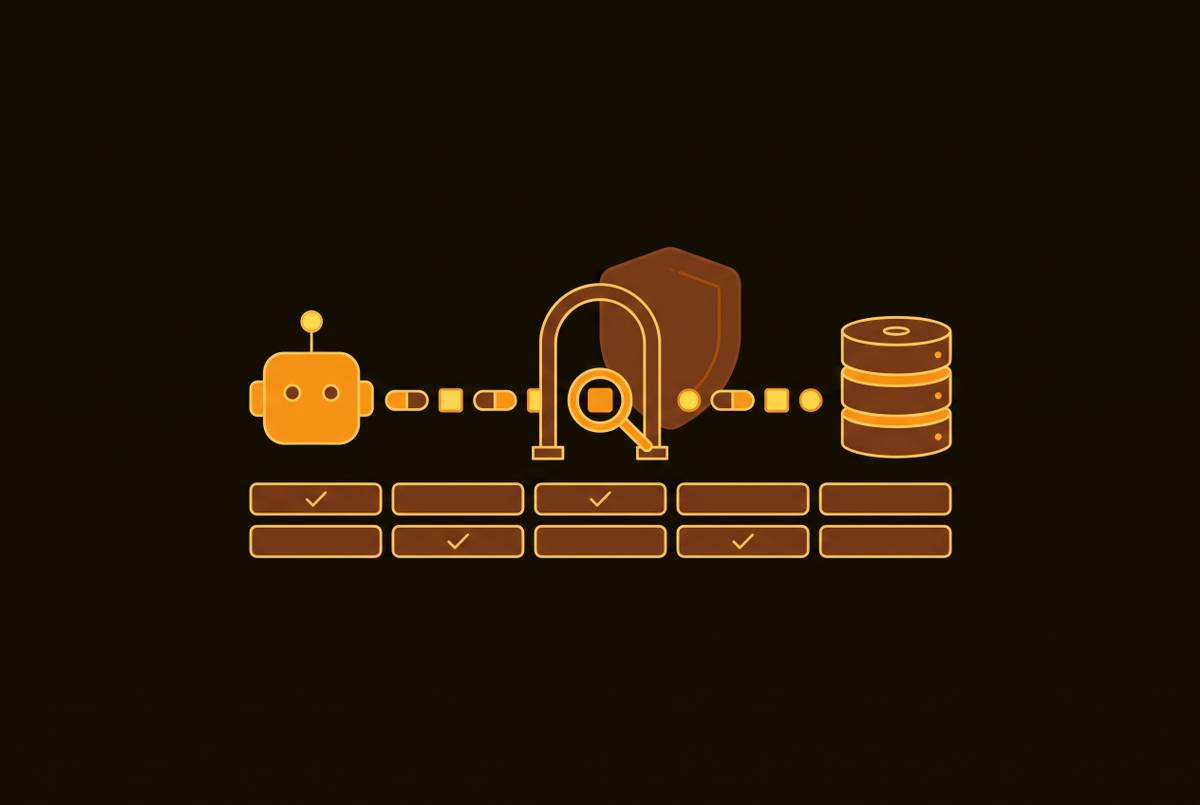
The Model Context Protocol separates the AI client, the MCP server, and the underlying resource [1][2][3]. Claude, ChatGPT, or another MCP-compatible agent acts as the client, while the server provides connector logic and enforcement in front of a database or API. This separation makes connector logic reusable across compatible clients. Analytics, however, needs more than a reusable connection. A general-purpose server might expose a tool to read a file or call an API, but an analytics server exposes metrics whose business definitions are absent from raw tables.
Those definitions decide whether a response that is technically valid answers what the business needs to know. The distinction becomes sharper between internal deployments, where a team queries its own data, and customer-facing deployments, where customers’ agents query the business data a SaaS product holds for them. Customer-facing access introduces a harder isolation problem and a more valuable product capability. The connector alone cannot resolve that tension. Trustworthiness and liability are central architectural concerns for an analytics MCP server.
Why agents consuming analytics data create governance pressure that human users never did
Agents change both how data is used and how much is used. They pull datasets continuously and combine concurrent SQL queries, vector searches, and key-value lookups within a workflow. Infrastructure suited to human analysts can degrade under that pattern, while manual approval cannot keep pace with autonomous retrieval. Freshness becomes part of correctness as well. A fraud detection agent using hours-old data makes decisions based on conditions that may have changed.
A person might question an unexpected number, but an autonomous agent can turn an incorrect metric into a flawed business decision without that interruption. Stable definitions and scoped access give their outputs a basis for trust, even when retrieval happens too quickly for individual review.
The appropriate access model is least-privilege by design. Agents should retrieve governed data, perform work in a sandbox isolated from production data, and promote only approved changes. That separation permits useful autonomy without granting unrestricted access. It also makes the analytical interface responsible for both the meaning of a result and the boundaries within which an agent can use it.
What metric hallucination is and why it happens without a semantic layer
Metric hallucination occurs when an agent reconstructs business logic from raw tables and produces a plausible but incorrect number. ARR provides a concrete example of the failure. An agent writing SQL might sum the wrong column, ignore returns, or double-count duplicate records while trying to infer the intended calculation. Database validity is not the same as business accuracy.
The model may be capable of the task but lack the context it needs. Without a governed definition of revenue, the agent supplies its own interpretation of what the business means. A semantic layer instead defines ARR, Churn, and CAC once as code, so dashboards, internal reporting tools, and autonomous agents use the same calculation. The definition belongs outside the conversation with the model. The metric should stay the same when the wording of a question changes.
Customer-facing analytics also has to account for business logic that differs by tenant. Without definitions scoped to each customer’s configuration, an agent can apply the wrong calculation or aggregate across tenants. The semantic layer therefore governs both interpretation and permissible queries. An MCP server in front of it can restrict access to list_metrics, list_dimensions, and run_query. Agents then discover and retrieve defined results instead of rebuilding the business model from a schema.
The security reality of MCP servers in production and what the exposure data shows
Incorrect metrics are only one class of architectural failure. OX Security disclosed an April 2026 finding that affected an estimated 200,000 vulnerable instances and found that STDIO command execution without input sanitization was a default in the design, so the defect went beyond a single product. The finding spans official SDKs, including Python, TypeScript, Java, and Rust. Anthropic confirmed the behavior was intentional and declined to modify the protocol architecture. Remediation consequently rests with downstream developers.
Credential handling reveals a separate, widespread weakness in deployments. Researchers who reviewed a large set of MCP server source trees found that roughly half advised or used storage of API keys and credentials in plaintext files outside a managed secrets vault. The MCP authorization specification defines OAuth 2.1 but makes authorization optional. A deployment can therefore follow the specification and still expose a public interface without authentication.
The Cloud Security Alliance’s May 2026 research note catalogued a point-in-time CVE table [4]. At least seven confirmed high- or critical-severity CVEs span platforms including MCP Inspector, LiteLLM, Cursor IDE, LibreChat, and Windsurf, which was rebranded as Devin Desktop on June 2, 2026. Unsafe defaults propagate through reference implementations and integrations, so patching individual defects cannot replace controls that limit what an exposed component can reach.
Why enforcement at the server or network layer is insufficient and where it must live instead
OAuth, firewalls, and API gateways are necessary connection controls, but none supplies an independent data boundary. Tool poisoning, rug pulls, and cross-server tool shadowing exploit the model’s trust in tool definitions. A model’s judgment cannot substitute for access enforcement. The Cloud Security Alliance’s MCP best practices guide calls for multiple independent controls so that one failure does not compromise the environment.
For analytics, the decisive boundary belongs in the data layer. Agents should query pre-modeled, pre-scoped datasets through read-only tools, never the production database. If the server or model behaves incorrectly, that separation limits access to what the governed backend permits. The dataset boundary becomes the access boundary. This is the reason to place a governed analytical layer behind MCP instead of relying on server configuration to make a broad database connection safe.
The core architectural pattern for pre-modeled datasets as the MCP backend
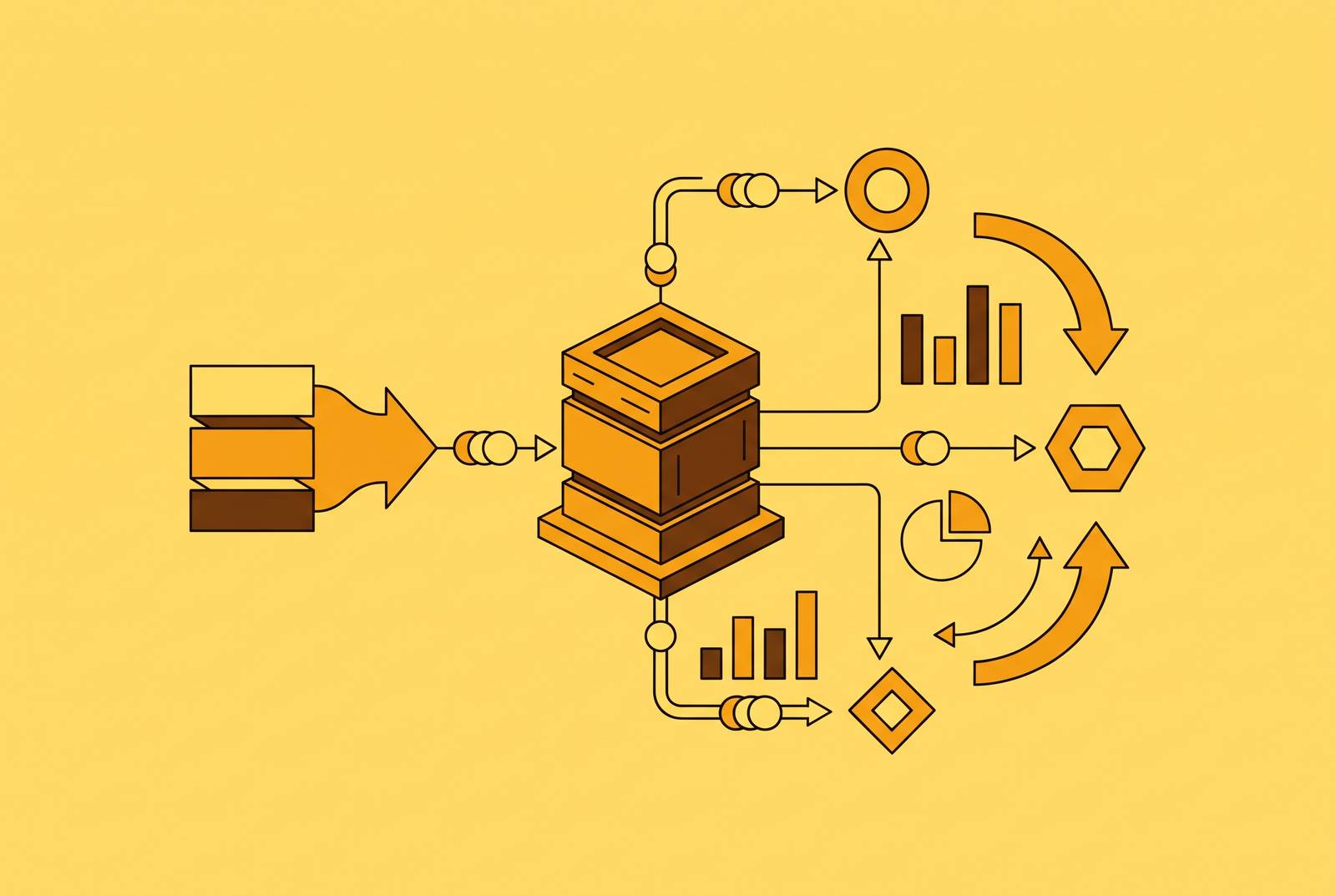
The backend consists of governed, pre-calculated datasets that exist independently of production. Expensive aggregations run on a schedule against a separate analytical layer, and their results are materialized for retrieval. An agent reads those results instead of running an analytical query against a live production table. This removes agent-driven aggregation from the primary database. Each metric also has a defined, versioned calculation, keeping its meaning in the data layer.
Parquet files queried through DuckDB provide a concrete implementation of this pattern. DuckDB’s columnar engine is built for OLAP workloads, including the aggregation patterns agents use, while the files can provide analytical access without a connection to production. The MCP interface remains deliberately narrow in scope. It exposes metric discovery, dimension discovery, and governed queries rather than production schema exploration or arbitrary SQL. Pre-calculation must still be scheduled around the freshness the agent’s task requires, because separation alone does not make an old result current.
This design is also a headless analytics architecture. As a headless CMS separates content infrastructure from presentation, headless analytics separates metric definitions from any particular BI tool or dashboard. The governed dataset supplies a common source of truth for both human and agent consumers. No prebuilt dashboard is required for agent access. For teams adding usage analytics to an AI agent, the architectural fit is an API-accessible metric layer.
Authentication, multi-tenancy, and scoping determine whether isolation holds
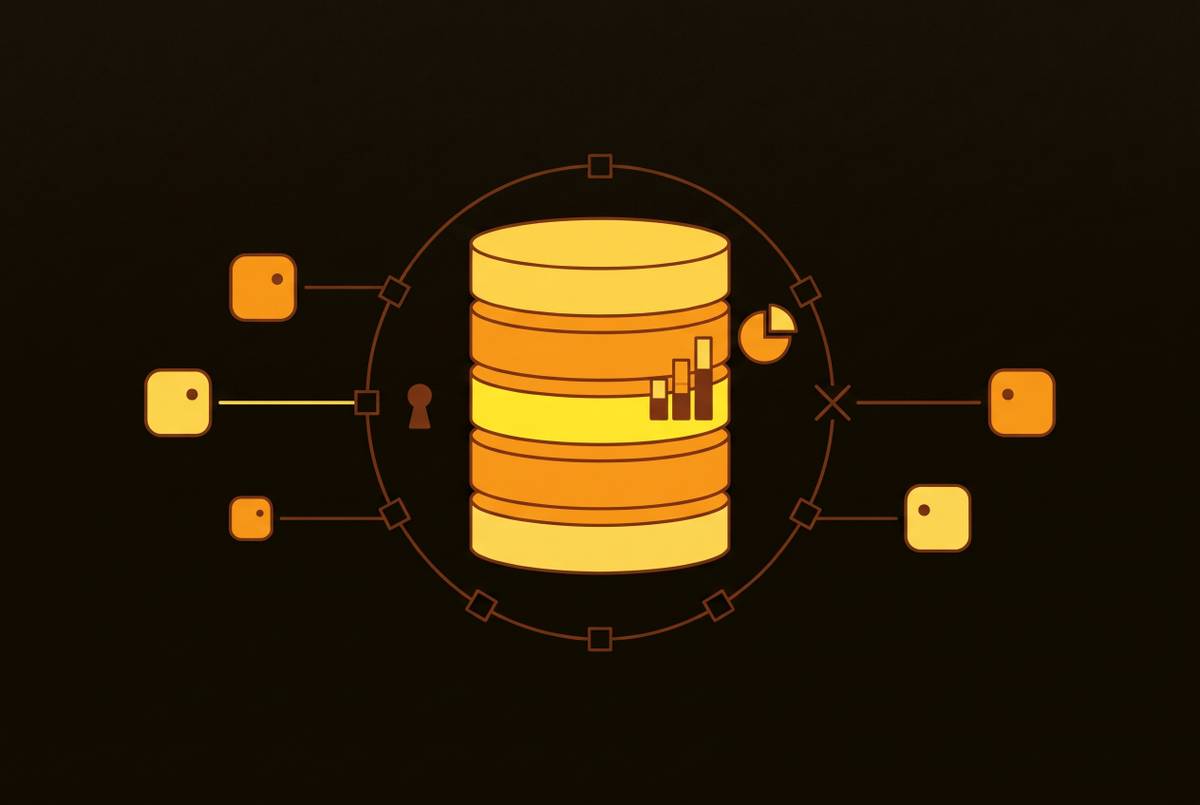
Even a governed dataset needs strict per-tenant and per-role access control each time it receives a request. OAuth 2.1 provides the specification’s authorization standard and should be implemented for production analytics deployments despite being optional in the protocol. Credentials belong in a managed secrets vault. For customer-facing access, each MCP connection must be scoped to one customer’s data, using per-tenant authentication tokens and row-level security in the underlying database. That scope must also hold at the exposed dataset boundary.
Internal deployments can centralize common controls through a federated gateway in front of multiple MCP servers. The gateway handles authentication, audit logging, and routing so each downstream server does not have to build those functions on its own. It does not replace the underlying data boundary. Centralized audit trails, SAML/SSO integration, and privacy-aware tool exposure also support readiness for SOC 2, HIPAA, and GDPR. These capabilities need to be designed in rather than retrofitted after sensitive fields reach agent responses.
The MCP 2026-07-28 specification revision removed protocol-level sessions, including the initialize/initialized handshake and the Mcp-Session-Id header, with explicit server-minted handles passed as tool arguments for cross-call state. Any request can consequently land on any server instance behind a standard load balancer. Access control must follow the token. Stateless routing simplifies horizontal scaling but does not relax the requirement to enforce scope on every request.
What analytics backend works for Supabase teams that need raw API access
Supabase’s managed Postgres provides a capable foundation through PostgREST, Realtime, Auth, Storage, and connection pooling. Direct analytical access to the primary, however, creates connection exhaustion, unbounded table scans, and contention with production workloads. Agent concurrency intensifies these existing operational weaknesses further. Connection limits, poor indexing, chatty queries, and misuse of realtime subscriptions are common early failure points. Full API control should therefore mean control over governed analytical results.
Supabase acquired Hydra, the team that co-developed pg_duckdb, to build Supabase Warehouse. The pg_duckdb extension embeds DuckDB’s columnar engine in Postgres, accelerating analytical queries without exporting data or managing a separate system. Its availability limits the deployment choice, however. The extension is not available on managed Supabase, making it an option for self-hosted deployments. For managed Supabase teams, the recommended pattern is to export pre-modeled metrics to Parquet, query them with DuckDB, and expose the governed results through MCP without adding agent query pressure to production.
Observability is still needed when agent reads are kept separate. Teams need p50/p95 latency dashboards, query-level visibility into slow requests, and connection-level monitoring that shows who is waiting and for what. Without these signals, production degradation cannot be connected to the workload causing it. A minimum foundation includes enabled pg_stat_statements and auto_explain, monitoring of the provider dashboard, one alert per critical metric, and a quarterly review of the top slow queries. This provides a practical basis for diagnosing performance without making a large observability deployment a prerequisite.
How to evaluate whether an analytics MCP server is trustworthy before agents depend on it
The server should pass five checks on how it is built. The first is whether the server restricts access to governed, pre-modeled metrics. Arbitrary SQL and schema exploration leave the agent responsible for reconstructing definitions and controlling query cost. The second is whether production is inaccessible by design. A rule telling an agent not to query production is weaker than an architecture in which its backend contains only separately governed datasets.
The third check covers OAuth 2.1 and credentials stored in a managed vault. Both must be in place now. The fourth is data-layer tenant isolation, supported by row-level security and per-tenant authentication tokens. The test is whether a misconfigured token can produce cross-tenant results. A connection labeled with a tenant is insufficient proof of isolation if the underlying data remains broadly accessible.
The fifth check is a centralized audit trail. It must capture which agent queried which metric and when, providing the record needed for compliance and incident response. Builders and buyers should get clear answers to all five checks before their agent workflows depend on the server. For a headless analytics platform, API flexibility is only useful when the exposed results retain stable meaning and enforceable scope. The purchasing decision should therefore depend on the governed backend behind the interface.